
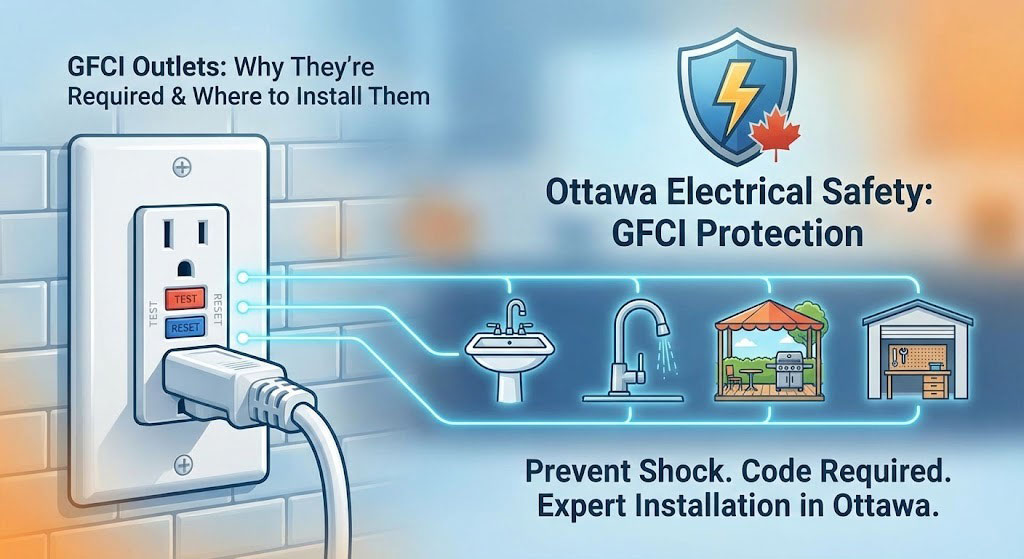
GFCI Outlets: Why They’re Required & Where to Install Them
Ground Fault Circuit Interrupter (GFCI) outlets are one of the most important electrical safety features in your Ottawa home. These specialized outlets can detect dangerous electrical imbalances and shut off power in a fraction of a second—potentially saving your life. Yet many Ottawa homes, especially those built before the 1990s, lack adequate GFCI protection in critical areas.
In this guide, we explain how GFCI outlets work, where they’re required by Ontario’s Electrical Safety Code, the cost of installation, and why every Ottawa homeowner should ensure their home has proper GFCI protection.
What You’ll Learn
- What Is a GFCI Outlet?
- How GFCI Outlets Work
- Where Are GFCI Outlets Required in Ontario?
- GFCI Outlet Installation Cost in Ottawa
- Types of GFCI Protection
- How to Test Your GFCI Outlets
- GFCI vs. AFCI: What’s the Difference?
- Frequently Asked Questions
What Is a GFCI Outlet?
A Ground Fault Circuit Interrupter (GFCI) outlet—sometimes called a GFI outlet—is a specialized electrical outlet designed to protect you from electrical shock. You can recognize GFCI outlets by their distinctive “TEST” and “RESET” buttons located between the two plug receptacles.
Unlike standard outlets that only provide power, GFCI outlets continuously monitor the electrical current flowing through them. If the outlet detects even a tiny imbalance in current—which could indicate electricity is flowing through an unintended path (like through a person)—it immediately shuts off power to prevent serious injury or death.
GFCI outlets are particularly important in areas where water and electricity may come into contact, such as bathrooms, kitchens, and outdoor spaces. Water is an excellent conductor of electricity, dramatically increasing the risk of fatal electric shock in these locations.
How GFCI Outlets Work
Understanding how GFCI outlets protect you helps illustrate why they’re so critical for electrical safety:
The Science Behind GFCI Protection
Under normal conditions, the electrical current flowing out through the “hot” wire and returning through the “neutral” wire should be equal. A GFCI outlet constantly compares these two currents. If there’s even a small difference—as little as 4-6 milliamps—the GFCI immediately trips and cuts power to the outlet.
This difference in current indicates a “ground fault”—electricity is escaping its intended path and flowing somewhere else, potentially through a person who has become an unintended path to ground. The GFCI can detect this imbalance and shut off power in as little as 1/40th of a second (0.025 seconds)—fast enough to prevent serious injury or death from electrocution.
What Causes Ground Faults?
- Water contact: Moisture creates a conductive path for electricity (dropping a hair dryer in water)
- Damaged insulation: Worn or frayed wire insulation exposes conductors
- Faulty appliances: Internal wiring failures in tools or appliances
- Wet conditions: Standing water, rain, or humidity in outdoor areas
- Conductive surfaces: Contact with metal pipes, wet concrete, or other grounded surfaces
Why GFCI Protection Matters
According to the Electrical Safety Foundation International (ESFI), GFCI outlets have reduced electrocutions in North American homes by approximately 70% since their introduction. A U.S. Consumer Product Safety Commission study found that 47% of electrocutions could have been prevented with proper GFCI protection.
Without GFCI protection, a ground fault can deliver a lethal shock before a standard circuit breaker trips—standard breakers are designed to protect wiring from overloads, not to protect people from shock.
Where Are GFCI Outlets Required in Ontario?
The Ontario Electrical Safety Code (OESC) requires GFCI protection in specific locations where the risk of electrical shock is highest. As of the 2024 OESC (effective May 1, 2025), GFCI protection is required in the following areas:
Required GFCI Locations in Ontario Homes
| Location | GFCI Requirement |
|---|---|
| Bathrooms | All receptacles require GFCI protection |
| Kitchens | All receptacles within 1.5 metres of a sink |
| Laundry Rooms | All 15-amp and 20-amp receptacles |
| Garages | All receptacles (except dedicated appliance outlets) |
| Unfinished Basements | All receptacles |
| Outdoor Areas | All outdoor receptacles within 2.5 metres of finished grade |
| Pools & Hot Tubs | All receptacles within the required distance of pool/spa equipment |
| Wet Bars | All receptacles within 1.5 metres of a sink |
| Vehicle Heater Outlets | All block heater receptacles (as of 2021 OESC) |
Important Notes on GFCI Requirements
- Grandfathered installations: If your Ottawa home was built before GFCI requirements were adopted, existing outlets may not require upgrading unless you’re doing electrical work in those areas. However, upgrading is strongly recommended for safety.
- Dedicated appliance outlets: Outlets behind major appliances like refrigerators and freezers typically don’t require GFCI protection, as nuisance tripping could cause food spoilage without your knowledge.
- Carports: Receptacles in carports are considered outdoor outlets and require GFCI protection.
- Powder rooms: A room with only a toilet and sink (no shower/tub) still requires GFCI protection for receptacles near the sink.
GFCI Outlet Installation Cost in Ottawa
Installing GFCI outlets is one of the most affordable electrical safety upgrades you can make to your Ottawa home. Here’s what to expect:
GFCI Installation Pricing
| Service | Typical Cost | Notes |
|---|---|---|
| GFCI outlet (materials only) | $15 – $35 | Standard 15-amp or 20-amp GFCI receptacle |
| Replace existing outlet with GFCI | $100 – $200 | Labour + materials, straightforward replacement |
| New GFCI outlet installation | $150 – $350 | Includes running new wiring if needed |
| GFCI circuit breaker | $150 – $300 | Protects entire circuit from the panel |
| Weather-resistant GFCI (outdoor) | $125 – $250 | Includes weatherproof cover |
Cost-Saving Tips
- Bundle installations: Have multiple GFCI outlets installed in one service call to maximize value from the electrician’s minimum service fee
- Downstream protection: One GFCI outlet can protect multiple standard outlets on the same circuit—you don’t need a GFCI at every location
- Combine with other work: Schedule GFCI upgrades alongside other electrical projects like panel upgrades or outlet installations
Types of GFCI Protection
GFCI protection can be provided in several ways, each with advantages for different situations:
1. GFCI Receptacles (Outlets)
The most common type, GFCI receptacles are installed directly at outlet locations. They feature TEST and RESET buttons and can protect both themselves and additional “downstream” outlets wired to their LOAD terminals. GFCI receptacles are ideal for bathrooms, kitchens, and other specific locations requiring protection.
2. GFCI Circuit Breakers
Installed in your electrical panel, GFCI circuit breakers protect an entire circuit from the source. These are useful when you need GFCI protection for multiple outlets on one circuit or when outlet access is difficult. However, if the breaker trips, you must reset it at the panel rather than at the outlet location.
3. Portable GFCI Devices
Plug-in GFCI adapters provide temporary protection for tools and equipment. These are useful for outdoor work, construction sites, or when using power tools in areas without built-in GFCI protection. They cost $25-$50 and plug directly into standard outlets.
4. Weather-Resistant GFCI Outlets
Designed for outdoor and damp locations, weather-resistant GFCI outlets feature corrosion-resistant components and are rated to withstand temperature extremes, humidity, and exposure to the elements. These are required for all outdoor installations in Ottawa.
5. Tamper-Resistant GFCI Outlets
Required by current code for most residential locations, tamper-resistant GFCI outlets include built-in shutter mechanisms that prevent children from inserting objects into the receptacle slots. The shutters only open when equal pressure is applied to both slots simultaneously (as with a plug).
How to Test Your GFCI Outlets
GFCI outlets should be tested monthly to ensure they’re functioning properly. A GFCI can fail “silently”—still providing power but no longer offering shock protection. Testing takes less than 30 seconds:
Monthly GFCI Testing Procedure
- Plug in a lamp or night light and turn it on so the light is visible
- Press the RESET button to ensure the outlet is in normal operating mode—the lamp should be on
- Press the TEST button—you should hear a click and the lamp should turn off immediately
- Press the RESET button again—the lamp should turn back on
What the Results Mean
- Lamp turns off when TEST is pressed: GFCI is working correctly
- Lamp stays on after pressing TEST: GFCI has failed and needs immediate replacement
- RESET button won’t stay in: There may be a ground fault on the circuit or a wiring problem—call an electrician
- GFCI trips frequently without pressing TEST: May indicate a ground fault somewhere on the circuit that needs investigation
When to Replace a GFCI Outlet
- The outlet fails the monthly test
- The RESET button won’t stay engaged
- The outlet is more than 10-15 years old
- The outlet trips constantly (nuisance tripping)
- You notice discoloration, burning smell, or physical damage
If your GFCI outlets aren’t testing properly, contact a licensed electrician in Ottawa to diagnose and replace them.
GFCI vs. AFCI: What’s the Difference?
While both GFCI and AFCI outlets are important safety devices, they protect against different hazards:
| Feature | GFCI | AFCI |
|---|---|---|
| Protects Against | Electric shock (ground faults) | Electrical fires (arc faults) |
| How It Works | Detects current imbalance between hot and neutral wires | Detects dangerous electrical arcing (sparking) |
| Required Locations | Bathrooms, kitchens, garages, outdoors, basements, laundry | Bedrooms, living rooms, hallways, closets |
| Primary Purpose | Protects people | Protects property (prevents fires) |
| Testing | Monthly using TEST/RESET buttons | Monthly using TEST button (usually on breaker) |
Key takeaway: GFCI and AFCI protect against different hazards—you need both for comprehensive electrical safety. They are not interchangeable.
Frequently Asked Questions About GFCI Outlets
What does GFCI stand for?
GFCI stands for Ground Fault Circuit Interrupter. It’s also sometimes called a GFI (Ground Fault Interrupter). Both terms refer to the same type of safety outlet that protects against electrical shock by detecting ground faults and immediately shutting off power.
Why does my GFCI outlet keep tripping?
Frequent GFCI tripping can indicate several issues: a ground fault somewhere on the circuit (possibly in an appliance), moisture in an outlet box, worn or damaged wiring, or a faulty GFCI outlet itself. If the outlet trips repeatedly, have a licensed electrician investigate—the GFCI may be doing its job by detecting a real problem.
Can I replace a regular outlet with a GFCI outlet myself?
While technically possible for those with electrical knowledge, DIY electrical work carries significant risks including shock, fire, and code violations. In Ontario, all electrical work requires an ESA permit and inspection. We strongly recommend hiring a licensed electrician for GFCI installations to ensure proper wiring and code compliance.
Do all outlets in a bathroom need to be GFCI?
All receptacles in bathrooms require GFCI protection, but not every outlet needs to be a GFCI outlet. If multiple bathroom outlets are on the same circuit, one GFCI outlet can protect all “downstream” outlets wired to its LOAD terminals. The other outlets should be labeled “GFCI Protected.”
Should I install GFCI outlets behind my refrigerator or freezer?
No. GFCI outlets are not recommended for refrigerators and freezers because nuisance tripping could cause the appliance to lose power without your knowledge, leading to food spoilage. The Ontario Electrical Safety Code exempts dedicated appliance outlets that are not readily accessible.
How long do GFCI outlets last?
GFCI outlets typically last 10-15 years, but can fail sooner due to power surges, moisture exposure, or frequent use. Because GFCIs can fail without any visible indication, monthly testing is essential. Replace any GFCI that fails the test procedure or is more than 15 years old.
What’s the difference between a GFCI outlet and a GFCI breaker?
Both provide the same ground fault protection, but in different locations. A GFCI outlet is installed at the receptacle location and protects that outlet plus any downstream outlets. A GFCI breaker is installed in your electrical panel and protects the entire circuit. GFCI breakers are useful when protecting multiple outlets or when outlet access is difficult, but if they trip, you must reset them at the panel.
Are GFCI outlets required in older Ottawa homes?
Homes built before GFCI requirements were adopted are generally “grandfathered” and don’t legally require upgrades unless you’re doing electrical work in those areas. However, we strongly recommend adding GFCI protection in bathrooms, kitchens, and outdoor areas regardless of your home’s age—it’s an affordable upgrade that could save your life.
Need GFCI Outlets Installed in Ottawa?
Proper GFCI protection is one of the most important electrical safety features in your home. Whether you need to upgrade outdated outlets, install GFCI protection in a newly renovated bathroom, or ensure your outdoor outlets meet current code requirements, our licensed electricians can help.
Ottawa Electric Service provides:
- Free estimates for GFCI installations
- Licensed, insured, and ESA-certified electricians
- Same-day service available for urgent safety concerns
- Service throughout Ottawa, Kanata, Orleans, Barrhaven, and Nepean
- All work meets Ontario Electrical Safety Code requirements
Call us at (613) 518-5010 or request a free quote online to discuss your GFCI outlet installation needs.
Related Electrical Services in Ottawa
- Outlet & Switch Installation
- Electrical Safety Inspections
- Electrical Panel Upgrades
- Residential Wiring Services
- Electrical Repair Services
- EV Charger Installation { “@context”: “https://schema.org”, “@type”: “FAQPage”, “mainEntity”: [ { “@type”: “Question”, “name”: “What does GFCI stand for?”, “acceptedAnswer”: { “@type”: “Answer”, “text”: “GFCI stands for Ground Fault Circuit Interrupter. It’s also sometimes called a GFI (Ground Fault Interrupter). Both terms refer to the same type of safety outlet that protects against electrical shock.” } }, { “@type”: “Question”, “name”: “Why does my GFCI outlet keep tripping?”, “acceptedAnswer”: { “@type”: “Answer”, “text”: “Frequent GFCI tripping can indicate a ground fault on the circuit, moisture in an outlet box, worn or damaged wiring, or a faulty GFCI outlet itself. If the outlet trips repeatedly, have a licensed electrician investigate.” } }, { “@type”: “Question”, “name”: “Can I replace a regular outlet with a GFCI outlet myself?”, “acceptedAnswer”: { “@type”: “Answer”, “text”: “While technically possible, DIY electrical work carries significant risks. In Ontario, all electrical work requires an ESA permit and inspection. We recommend hiring a licensed electrician for GFCI installations.” } }, { “@type”: “Question”, “name”: “Do all outlets in a bathroom need to be GFCI?”, “acceptedAnswer”: { “@type”: “Answer”, “text”: “All receptacles in bathrooms require GFCI protection, but not every outlet needs to be a GFCI outlet. One GFCI outlet can protect multiple downstream outlets wired to its LOAD terminals.” } }, { “@type”: “Question”, “name”: “Should I install GFCI outlets behind my refrigerator or freezer?”, “acceptedAnswer”: { “@type”: “Answer”, “text”: “No. GFCI outlets are not recommended for refrigerators and freezers because nuisance tripping could cause the appliance to lose power without your knowledge, leading to food spoilage.” } }, { “@type”: “Question”, “name”: “How long do GFCI outlets last?”, “acceptedAnswer”: { “@type”: “Answer”, “text”: “GFCI outlets typically last 10-15 years, but can fail sooner. Monthly testing is essential because GFCIs can fail without any visible indication. Replace any GFCI that fails the test procedure.” } }, { “@type”: “Question”, “name”: “What’s the difference between a GFCI outlet and a GFCI breaker?”, “acceptedAnswer”: { “@type”: “Answer”, “text”: “Both provide ground fault protection in different locations. A GFCI outlet is installed at the receptacle and protects that outlet plus downstream outlets. A GFCI breaker is installed in your electrical panel and protects the entire circuit.” } }, { “@type”: “Question”, “name”: “Are GFCI outlets required in older Ottawa homes?”, “acceptedAnswer”: { “@type”: “Answer”, “text”: “Older homes are generally grandfathered and don’t legally require upgrades unless doing electrical work. However, we strongly recommend adding GFCI protection in bathrooms, kitchens, and outdoor areas regardless of home age.” } } ]}[/et_pb_code]
Note: All prices mentioned in this article are provided for general reference and informational purposes only. These prices are not fixed and may vary depending on facts, market conditions, location, time, availability, or other relevant factors. Actual prices may change without prior notice. Readers are advised to verify details independently before making any decisions.