
Smoke Detector Installation & Maintenance Guide for Ottawa Homeowners
Smoke detectors save lives—it’s that simple. These small devices provide critical early warning during fires, giving families precious minutes to escape safely. In Ontario, properly installed and maintained smoke alarms are required by law in every home, and with good reason: homes with working smoke detectors have significantly higher fire survival rates than those without. With new Ontario Fire Code changes taking effect January 1, 2026 expanding carbon monoxide alarm requirements, Ottawa homeowners need current information about smoke and CO detector installation, placement, and maintenance. This comprehensive guide covers everything you need to know about protecting your family with properly installed fire safety devices in 2026.
Ontario Fire Code Requirements for Smoke & CO Alarms 2026
Smoke Alarm Requirements
Ontario Fire Code mandates smoke alarms in specific locations throughout every home. These requirements apply to all residential properties regardless of age or ownership status. Homeowners must install smoke alarms on every storey of the home including basements. Additionally, alarms must be located outside each sleeping area—typically in hallways serving bedrooms.
For homes with bedrooms on multiple levels, each floor requires its own smoke alarm. The alarm should be positioned to wake sleeping occupants if fire breaks out anywhere on that level. Even floors without bedrooms still require smoke alarms, ensuring comprehensive fire detection coverage throughout your entire home.
New Carbon Monoxide Alarm Requirements (Effective January 1, 2026)
Significant changes to Ontario Fire Code took effect January 1, 2026, expanding carbon monoxide alarm requirements for residential properties. Previously, CO alarms were only required outside sleeping areas in homes with fuel-burning appliances or attached garages. The new regulations require CO alarms on every storey of homes that contain fuel-burning appliances, fireplaces, or attached garages.
Under the updated requirements, homeowners must install CO alarms adjacent to each sleeping area AND on every storey of the home. This expanded protection recognizes that carbon monoxide can migrate throughout homes from any level. Homes with natural gas furnaces, gas water heaters, fireplaces, or attached garages must comply with these new requirements immediately.
Who is Responsible for Installation?
Homeowners bear responsibility for installing and maintaining smoke and carbon monoxide alarms in their properties. For rental properties, landlords must ensure proper alarm installation throughout rental units and common areas. Tenants are typically responsible for testing alarms and replacing batteries in battery-operated units, while landlords maintain hardwired systems during regular property maintenance.
New home construction and major renovations require hardwired smoke and CO alarms with battery backup. These installations must be completed by licensed electricians and inspected for code compliance. Existing homes can use battery-operated or plug-in alarms if adding hardwired units proves impractical during renovations.
Strobe Light Requirements for New Construction
Homes built after January 1, 2015, or undergoing major renovations must include smoke and CO alarms with built-in strobe lights. This accessibility feature ensures people who are deaf or hard of hearing receive visual fire warnings. The strobing provides critical alerts that audible alarms alone cannot deliver to those with hearing impairments.
Existing homes built before 2015 are not required to upgrade to strobe-equipped alarms unless completing major renovations requiring permits. However, families with members who have hearing impairments should strongly consider installing strobe-capable alarms regardless of legal requirements for maximum safety protection.
Penalties for Non-Compliance
Fire departments enforce smoke and CO alarm requirements during inspections and fire incidents. Homeowners without required alarms face potential fines and liability issues if fires occur. More importantly, missing or non-functional alarms put families at serious risk. Insurance companies may deny claims for fire damage if required smoke detectors were absent or disabled during fire events.
Beyond legal and insurance implications, proper smoke and CO alarm installation protects lives. Fire deaths occur disproportionately in homes without working smoke alarms. Investing in proper fire detection provides invaluable protection that far exceeds any compliance considerations.
Types of Smoke Detectors & Carbon Monoxide Alarms
Ionization Smoke Detectors
Ionization smoke detectors respond quickly to fast-flaming fires that produce small smoke particles. These alarms contain small amounts of radioactive material that ionize air molecules, creating electrical current flow. When smoke enters the chamber, it disrupts this current, triggering the alarm. Ionization detectors excel at detecting fires from burning paper, wood, and flammable liquids.
However, ionization alarms are slower to detect smoldering fires that produce larger smoke particles. They can also trigger false alarms from cooking smoke or steam. Despite these limitations, ionization detectors remain popular due to their affordable pricing and effectiveness against fast-spreading fires.
Photoelectric Smoke Detectors
Photoelectric smoke detectors use light beams to detect smoke particles. These devices shine light beams across chambers that smoke particles scatter when entering. Scattered light hits sensors, triggering alarms. Photoelectric detectors respond faster to smoldering fires that produce larger smoke particles common in upholstery, mattress, and electrical fires.
Fire safety experts increasingly recommend photoelectric detectors for bedrooms and sleeping areas. Smoldering fires often develop during nighttime hours while families sleep. The faster response of photoelectric detectors to these dangerous smoldering conditions provides critical extra evacuation time. These alarms also experience fewer false alarms from cooking activities compared to ionization models.
Dual-Sensor Smoke Detectors
Dual-sensor smoke detectors combine both ionization and photoelectric technologies in single units. These comprehensive alarms detect both fast-flaming and slow-smoldering fires effectively. While costing more than single-technology detectors, dual-sensor units provide superior protection against all fire types. Many fire safety professionals recommend dual-sensor detectors as the best single-alarm choice for comprehensive home protection.
Dual-sensor alarms eliminate the need to choose between ionization and photoelectric technologies. Families gain protection against rapid-spreading and slow-developing fires from one device. The additional cost proves worthwhile for enhanced safety and peace of mind that your smoke detection covers all fire scenarios.
Hardwired vs. Battery-Operated Smoke Detectors
Hardwired smoke detectors connect directly to home electrical systems and include battery backups maintaining protection during power outages. These units interconnect, meaning when one detector activates, all alarms throughout the home sound simultaneously. This whole-home alerting provides maximum warning regardless of fire location. Hardwired installation requires professional licensed electricians and costs more than battery units but offers superior reliability.
Battery-operated smoke detectors run entirely on batteries without electrical connections. These affordable units install easily without professional help—simply mount to ceilings or walls and insert batteries. However, battery detectors require regular battery replacement and don’t interconnect with other alarms unless using wireless models. Battery units work well for adding supplemental protection or in locations where hardwired installation proves impractical.
Smart Smoke Detectors
Smart smoke detectors connect to home WiFi networks, sending alerts to smartphones when alarms activate. These advanced units allow remote monitoring, battery status checking, and alarm testing via mobile apps. Some models integrate with smart home systems, triggering lights or unlocking doors during emergencies. Voice announcements identify which room detected smoke, helping families locate fires quickly.
While smart detectors cost significantly more than traditional alarms, they provide valuable features for tech-savvy homeowners or those frequently away from home. Remote alerts ensure you know about home fire emergencies even when traveling. However, smart features don’t replace fundamental detection capabilities—ensure smart detectors also meet basic smoke detection performance standards.
Carbon Monoxide Detectors
Carbon monoxide detectors use electrochemical sensors detecting invisible, odorless CO gas produced by fuel-burning appliances. Unlike smoke detectors, CO alarms don’t detect fires—they warn about dangerous gas accumulation from malfunctioning furnaces, water heaters, fireplaces, or vehicles running in attached garages. Carbon monoxide poisoning causes hundreds of deaths and thousands of hospitalizations annually across Canada.
CO detectors are available as dedicated units or combination smoke/CO alarms incorporating both technologies in single devices. Combination units simplify installation by providing dual protection from one alarm. However, dedicated CO detectors offer more flexibility in placement optimization since smoke and CO alarm location requirements differ slightly. Homes with fuel-burning equipment must have CO detection regardless of which device type you choose.
Where to Install Smoke Detectors & CO Alarms in Your Ottawa Home
Smoke Detector Placement Rules
Ontario Fire Code specifies exact smoke alarm locations ensuring adequate fire detection coverage. Install smoke detectors on every storey including basements and habitable attics. Place alarms in hallways outside bedrooms or sleeping areas—this location provides optimal warning for occupants asleep in bedrooms. Hallway placement ensures alarm sounds reach bedrooms regardless of whether bedroom doors are open or closed.
For homes with bedrooms separated by living areas, install smoke alarms in each hallway serving bedroom clusters. Large homes may require multiple alarms per floor ensuring adequate coverage. Bedrooms themselves should contain individual smoke detectors when possible, providing redundant protection for sleeping occupants most vulnerable during nighttime fires.
Optimal Ceiling and Wall Mounting
Mount smoke detectors on ceilings near room centers or high on walls between 4 and 12 inches from ceilings. Smoke rises and accumulates at ceiling levels, making ceiling mounting most effective. When ceiling mounting proves impractical, wall-mounted detectors work effectively if positioned properly in smoke accumulation zones. Never install smoke detectors in corners where walls meet ceilings—air circulation patterns in corners can prevent smoke from reaching sensors.
Keep smoke alarms at least 10 feet away from cooking appliances preventing false alarms from cooking smoke and steam. Similarly, avoid mounting near bathrooms where shower steam triggers nuisance alarms. Position detectors at least 3 feet from supply vents, return vents, and ceiling fans where air currents might prevent smoke from reaching sensors effectively.
Kitchen and Cooking Area Considerations
Kitchens require careful smoke detector placement balancing fire detection with false alarm prevention. Install detectors at least 10 feet from stoves and ovens—closer placement causes frequent nuisance alarms from normal cooking. For smaller homes where 10-foot spacing proves impossible, photoelectric detectors work better than ionization models near kitchens. Photoelectric technology resists false alarms from cooking smoke better while still detecting actual fire conditions.
Consider installing smoke alarms in hallways or adjacent rooms rather than directly in kitchens. This approach provides kitchen fire detection while minimizing cooking-related false alarms. Never disable kitchen smoke detectors due to nuisance alarms—instead, relocate detectors to more appropriate positions maintaining protection without constant false triggering.
Carbon Monoxide Alarm Placement (New 2026 Requirements)
Under new 2026 Ontario Fire Code requirements, CO alarms must be installed on every storey of homes with fuel-burning appliances, fireplaces, or attached garages. Place CO detectors outside sleeping areas where alarms will wake sleeping occupants. Additionally, install alarms on each floor level including basements with furnaces or water heaters. Unlike smoke which rises, carbon monoxide spreads evenly throughout air, making proper placement on all levels critical.
Position CO detectors at least 15 feet from fuel-burning appliances to prevent false alarms from normal appliance operation. Avoid installing CO alarms in garages, bathrooms, or directly above sinks and stoves where humidity and temperature fluctuations cause sensor problems. Wall mounting at shoulder height works well for CO detectors, though ceiling mounting also functions effectively since CO mixes uniformly with air rather than rising like smoke.
Bedrooms and Sleeping Areas
Every bedroom should contain its own smoke detector providing occupants maximum warning during nighttime fires when people sleep most soundly. Bedroom detectors ensure audible alarms wake occupants even with doors closed—closed doors significantly reduce sound transmission from hallway alarms. Install bedroom detectors on ceilings near room centers or on walls near doorways maximizing alarm audibility.
For bedrooms with high ceilings, wall mounting provides better detection since smoke may take longer to reach very high ceiling-mounted detectors. Sloped or cathedral ceilings require detectors mounted within 3 feet of ceiling peaks where smoke accumulates. Ensure bedroom smoke detectors interconnect with other home alarms so fire detection anywhere triggers all alarms simultaneously providing whole-home warning.
Basements and Attics
Basements require smoke detectors even if unfinished or used primarily for storage. Position basement alarms on ceilings near stairways providing warning to upper floors if basement fires develop. Basements containing furnaces, water heaters, or electrical panels need smoke and CO detection given fire risks from this mechanical equipment. Unfinished basements with exposed joists allow mounting detectors directly to joist undersides in appropriate locations.
Habitable attics need smoke detection just like other living spaces. Attic alarms should mount at or near ceiling peaks where smoke accumulates. Storage-only attics without heating or regular occupancy don’t legally require smoke detectors but benefit from installation given fire risks from electrical wiring, insulation, and stored materials. When installing attic alarms, ensure temperatures stay within detector operating ranges since extreme attic heat can affect device operation.
Multi-Level Homes and Stairways
Stairways connecting multiple levels need smoke detector coverage since stairs often become blocked during fires, trapping occupants. Install alarms at both top and bottom of stairways providing detection regardless of fire origin. For homes with multi-story open areas like vaulted living rooms, install smoke detectors at highest ceiling points where smoke naturally rises and collects.
Split-level homes require careful detector placement ensuring all levels receive coverage. Install alarms on each distinct level even when vertical separation seems minimal. Interconnected hardwired alarms work especially well in multi-level homes providing simultaneous warning throughout all floors regardless of fire location.
Smoke Detector Installation Costs in Ottawa 2026
Battery-Operated Smoke Detector Costs
Basic battery-operated ionization smoke detectors cost between $15 and $40 per unit for simple models. Photoelectric battery detectors range from $25 to $50 each. Dual-sensor battery-operated alarms cost $35 to $70 per detector. These prices include only the devices themselves—installation is simple DIY work requiring only mounting hardware (usually included) and batteries.
Battery-operated CO detectors cost $30 to $60 for basic models and $50 to $100 for advanced units with digital displays showing CO levels. Combination smoke/CO battery alarms range from $40 to $80 per unit. Budget approximately $200 to $400 for complete battery-operated detection system protecting average 2,000 square foot home with 3-4 bedrooms.
Hardwired Smoke Detector Installation Costs
Hardwired smoke detector installation costs $130 to $250 per detector including device, professional installation, and wiring. Whole-house hardwired smoke detection systems for typical 3-bedroom homes cost $950 to $1,600 installed. New construction installations cost less than retrofitting existing homes due to easier wiring access before drywall installation. Retrofit installations require running wires through finished walls increasing labor costs significantly.
Hardwired interconnected CO alarms cost $150 to $300 per unit installed. Combination smoke/CO hardwired detectors range from $180 to $350 per device with professional installation. While hardwired systems require higher upfront investment, they provide superior reliability, interconnection capabilities, and eliminate ongoing battery replacement costs making them worthwhile long-term investments.
Labor Costs for Professional Installation
Licensed electricians charge $100 to $150 per hour for smoke detector installation work in Ottawa. Simple hardwired detector installation in accessible locations takes 1-2 hours per device. Complex retrofits requiring extensive wiring through finished walls can take 3-4 hours per detector. Many electricians offer package pricing for multiple detector installations reducing per-unit costs when installing comprehensive systems.
Combining smoke detector installation with other electrical work reduces overall costs since electricians are already on-site. Installing detectors during electrical panel upgrades or home rewiring projects provides cost savings through combined labor efficiency.
Cost Factors Affecting Installation Pricing
Several factors influence final smoke detector installation costs. Home age significantly impacts pricing—older homes with limited attic access or multiple-story layouts require more labor. Number of detectors needed depends on home size, layout, and bedroom count. Detector technology choice affects pricing with basic ionization alarms costing less than dual-sensor or smart models.
New construction installations cost substantially less than retrofits. Builders installing hardwired systems during construction complete work before finishing walls, simplifying wiring dramatically. Retrofit installations require accessing wall cavities, fishing wires between floors, patching drywall, and painting—all adding labor time and material costs. When building homes or completing major renovations, always install hardwired interconnected systems during construction avoiding expensive future retrofits.
Ongoing Maintenance Costs
Battery-operated smoke detectors require battery replacement every 6-12 months. 9-volt batteries cost $5 to $10 per detector annually. Hardwired detectors with battery backups need backup battery replacement every 1-2 years at similar per-unit costs. Smart detectors often use sealed lithium batteries lasting the detector’s full 10-year lifespan, eliminating replacement costs but requiring complete unit replacement at end of life.
All smoke and CO detectors should be replaced every 10 years regardless of apparent functionality. Sensors degrade over time reducing detection effectiveness even when devices seem operational. Budget for complete system replacement every decade ensuring continued effective fire and CO detection. This 10-year replacement cycle represents ongoing safety investment protecting families throughout detector lifespans.
Cost vs. Value for Life Safety
Smoke detector costs are minimal compared to fire safety value provided. A $200 battery-operated detection system or $1,500 hardwired system offers priceless protection. Fires cause billions in property damage and thousands of deaths annually. Homes with working smoke alarms have dramatically higher survival rates during fires. The few hundred or thousand dollars spent on proper detection delivers value impossible to quantify.
Insurance companies recognize smoke detector importance with some offering premium discounts for monitored or smart detection systems. These modest savings help offset installation costs. More importantly, proper fire detection reduces catastrophic fire damage claims, insurance deductibles, and personal injury or loss of life. From pure risk management perspective, smoke detector investment provides exceptional return protecting families and properties.
Professional Smoke Detector Installation Process
Initial Assessment and Planning
Professional installation begins with comprehensive home assessment identifying optimal detector locations meeting Ontario Fire Code requirements. Our licensed electricians evaluate your home’s layout, bedroom locations, fuel-burning appliance types, and existing detection system. This assessment determines how many detectors your home needs and best installation locations balancing code compliance with practical considerations.
Electricians discuss detector options including hardwired versus battery-operated, ionization versus photoelectric technology, and basic versus smart features. They provide detailed quotes outlining equipment costs, labor, and total project pricing. For retrofits, electricians explain wiring routes, access requirements, and any necessary wall repairs ensuring you understand complete installation scope before work begins.
Hardwired Installation Steps
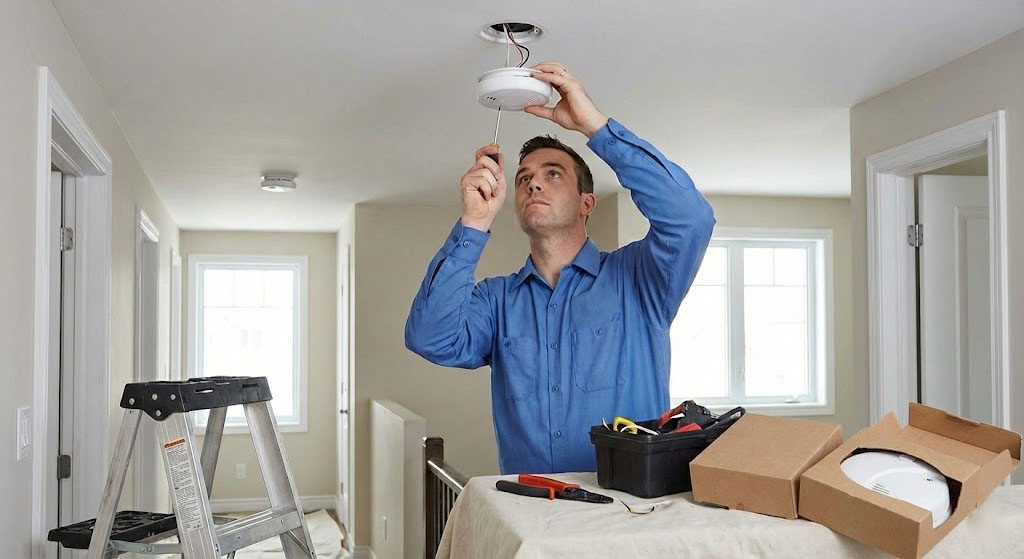
Hardwired smoke detector installation requires running electrical wiring from circuit breakers to each detector location. Electricians route wires through attics, basements, or wall cavities connecting all detectors on dedicated circuits. This wiring interconnects detectors so when one alarms, all units sound throughout the home. Running interconnect wiring represents the most labor-intensive installation aspect requiring expertise fishing wires through existing walls.
After running wiring, electricians install mounting boxes at each detector location and connect wires following manufacturer specifications. They mount detectors securely, test functionality, and verify interconnection works properly. All hardwired installations require backup batteries maintaining protection during power outages. Electricians test both primary power and battery backup operation ensuring detectors function reliably regardless of electrical system status.
Testing and Verification
After installation, thorough testing verifies every detector operates correctly. Electricians test each smoke alarm individually using test buttons and actual smoke if units include smoke testing modes. They verify interconnection by activating one detector and confirming all units alarm simultaneously throughout the home. CO detectors undergo function testing confirming proper operation and sensitivity.
Sound level testing ensures alarms produce adequate volume waking sleeping occupants. Ontario code requires smoke alarms to produce at least 85 decibels at 10 feet. Electricians verify this requirement especially in bedrooms with closed doors. They also confirm strobe lights function properly on newer systems required in post-2015 construction. Complete documentation of installation including detector locations, types, and installation dates provides permanent records for homeowners.
Homeowner Education
Professional installation includes homeowner education about proper detector operation and maintenance. Electricians demonstrate how to test alarms using test buttons, when to replace batteries, and how to respond to alarms. They explain difference between smoke and CO alarm sounds helping families distinguish emergency types. Proper understanding ensures families know appropriate actions when alarms activate.
Electricians review maintenance schedules including monthly testing, battery replacement timing, and 10-year detector replacement requirements. They provide written maintenance instructions and detector warranty information. Education also covers false alarm prevention, appropriate alarm locations, and when to replace aging detectors. This comprehensive instruction ensures homeowners can maintain systems properly between professional service visits.
Permits and Inspections
Hardwired smoke detector installation typically doesn’t require separate electrical permits when part of new construction or major renovations already requiring permits. However, retrofit installations in existing homes may need permits depending on local requirements and installation scope. Professional electricians handle all permit applications and coordinate required inspections ensuring code compliance.
Some municipalities require fire department inspections verifying proper smoke detector installation especially in rental properties or multi-unit buildings. Electricians coordinate these inspections and address any deficiencies identified. Proper permitting and inspection documentation proves valuable during home sales, insurance applications, and if fire incidents unfortunately occur. Our team ensures all necessary regulatory requirements are met providing homeowners complete peace of mind regarding code compliance.
Smoke Detector Testing & Maintenance Schedule
Monthly Testing Requirements
Test all smoke and CO detectors monthly using built-in test buttons. Press and hold test buttons for several seconds until alarms sound. This testing verifies alarm functionality including speakers, interconnection, and basic sensor operation. If detectors fail to sound during testing, replace batteries immediately in battery-operated units or call electricians for hardwired system troubleshooting.
Monthly testing takes only minutes but provides critical assurance your detection system protects your family. Mark calendars or set smartphone reminders ensuring testing doesn’t get forgotten. Many smart smoke detectors offer automated testing sending reports via apps eliminating manual monthly tasks. However, even with automated testing, periodic manual verification remains good practice ensuring systems work when needed most.
Battery Replacement Schedule
Replace batteries in battery-operated smoke detectors every 6-12 months before they fail. Many people replace batteries during daylight saving time changes providing easy-to-remember twice-yearly schedule. Hardwired detectors with battery backups also need backup battery replacement every 1-2 years. Always replace batteries promptly when low-battery chirping begins—never remove batteries to stop annoying chirping without immediate replacement.
Use fresh batteries from reputable manufacturers avoiding cheap off-brand batteries with shorter lifespans. Some newer detectors use sealed 10-year lithium batteries lasting the detector’s entire lifespan eliminating battery replacement needs. When these sealed-battery detectors reach end of life, replace entire units rather than attempting battery changes in sealed units not designed for battery replacement.
Cleaning and Dust Removal
Dust and cobwebs accumulate in smoke detectors over time reducing sensor effectiveness. Clean detectors every 6 months using vacuum cleaner with soft brush attachment gently removing dust from exterior vents. Never use water or cleaning sprays on smoke detectors—moisture damages electronic components and sensors. If vacuuming doesn’t remove stubborn dirt, wipe exteriors with dry soft cloths avoiding any moisture contact.
Pay special attention to detectors in dusty areas like basements, garages, or workshops where airborne particles accumulate quickly. Regular cleaning maintains optimal sensor performance ensuring detectors respond quickly to actual fire conditions. While cleaning, also verify detector mounting remains secure—detectors sometimes loosen over years requiring re-fastening to ceilings or walls.
False Alarm Prevention
Frequent false alarms frustrate homeowners and create dangerous temptation to disable detectors. Prevent false alarms by installing detectors at least 10 feet from cooking appliances and away from bathrooms where steam triggers alarms. Use photoelectric detectors near kitchens since they resist cooking-smoke false alarms better than ionization models. Proper placement prevents most nuisance alarms without compromising protection.
When false alarms occur, never remove batteries or disable detectors. Instead, identify and address causes—relocating detectors, replacing aging units, or improving kitchen ventilation. Silencing alarms temporarily using hush buttons while cooking allows detectors to reset after smoke clears without disabling protection. If false alarms persist despite proper installation and maintenance, replace detectors as sensors may be degraded or defective.
Seasonal Maintenance Tasks
Each spring and fall, perform comprehensive smoke detector system checks coinciding with daylight saving time changes. Replace all batteries in battery-operated units, test each detector thoroughly, clean dust buildup, and verify mounting security. Check detector manufacture dates replacing any units exceeding 10 years old. Review detector locations ensuring no furniture, renovations, or home changes block smoke and CO detection.
Seasonal maintenance also provides opportunity to review family fire escape plans. Discuss evacuation routes, meeting places outside, and emergency procedures. Practice fire drills ensuring children know how to respond to alarms and evacuate safely. Combining detector maintenance with family safety planning creates comprehensive fire protection program going beyond just device upkeep.
Professional Inspection Recommendations
Schedule professional electrician inspections every 3-5 years verifying smoke detector system integrity. Professional inspections test interconnection functionality, measure alarm sound levels, verify proper locations per current codes, and identify aging detectors needing replacement. Electricians also check hardwired detector electrical connections, circuit operation, and backup battery conditions beyond what homeowners typically assess.
Professional inspections prove especially valuable in older homes with original detection systems potentially needing updates to meet current code requirements. Combining smoke detector inspection with comprehensive electrical system inspections ensures both fire detection and overall electrical safety. Our electricians provide detailed assessment reports documenting detector conditions and recommending updates or replacements maintaining optimal protection.
When to Replace Smoke Detectors & CO Alarms
10-Year Replacement Rule
All smoke detectors and carbon monoxide alarms should be replaced every 10 years regardless of apparent functionality. Sensors degrade over time becoming less sensitive and responsive even when devices appear operational. Manufacturers clearly state 10-year lifespans on detector packaging and usually stamp manufacture dates on detector backs. Calculate replacement timing from manufacture dates not installation dates since detectors age during storage.
Many homeowners unknowingly rely on detectors exceeding 10 years offering false security while providing degraded protection. Check all home detectors today noting manufacture dates and replacing any over 10 years old. This simple check could save lives by ensuring your fire and CO detection systems work at full effectiveness when emergencies occur.
Signs Detectors Need Immediate Replacement
Replace detectors immediately if they fail monthly tests even after battery replacement. Yellowed or discolored plastic housings indicate aging detectors requiring replacement. Frequent false alarms despite proper location and maintenance suggest sensor degradation. Detectors making chirping sounds beyond low-battery warnings may have malfunctioning components. Any physical damage from impacts, water exposure, or paint overspray necessitates immediate replacement.
Never ignore detector malfunction signs hoping they’ll resolve themselves. Defective detectors provide no protection during fires when families need them most. Replacement costs are minimal compared to fire injury and property damage risks from non-functional detection. When in doubt, replace suspicious detectors rather than risking inadequate protection.
Technology Upgrades
Consider replacing functional but older detectors with newer technology offering improved protection. Photoelectric and dual-sensor detectors provide better detection than older ionization-only models. Interconnected systems alert entire home versus single-alarm warnings. Smart detectors offer remote monitoring, voice alerts, and smartphone notifications. Sealed-battery models eliminate battery maintenance hassles.
Technology improvements justify replacing detectors before 10-year limits expire. The enhanced protection from modern detection technology provides safety benefits outweighing functional older detector retention. When upgrading, donate still-functional removed detectors to community programs rather than disposing working units that can protect others during their remaining useful lives.
After Fire or Smoke Exposure
Replace all smoke and CO detectors after any fire occurrence in your home even if detectors didn’t activate. Heat, smoke, and fire suppression chemicals can damage detector sensors and electronics. Similarly, replace detectors exposed to heavy smoke from cooking fires or other smoke-producing incidents. Even if detectors subsequently test successfully, hidden damage may impair future operation when you need protection most.
Fire restoration professionals recommend replacing all detection devices during post-fire cleanup and reconstruction. Include replacement costs in insurance claims since damaged detectors qualify as fire losses. This precaution ensures rebuilt homes have fully functional detection protecting families returning to fire-affected properties. Our emergency electrical services include smoke detector replacement during fire recovery electrical work.
During Home Renovations
Major renovations provide excellent opportunities to upgrade smoke detection systems. Replace old detectors with modern hardwired interconnected systems while walls are open and wiring access is simple. Current renovations allow compliance with latest Ontario Fire Code requirements including strobe lights and expanded CO detection. Renovation permits may require detection upgrades bringing systems current with modern codes.
Coordinate smoke detector upgrades with contractors performing renovations. Licensed electricians install new hardwired systems during framing stages before drywall installation simplifying wiring dramatically. This timing provides cost-effective detection system modernization enhancing home safety while minimizing installation expenses compared to later retrofits in finished spaces.
Common Smoke Detector Installation Mistakes to Avoid
Installing Too Few Detectors
Many homeowners install only minimum required detectors rather than comprehensive coverage. Ontario code specifies minimum requirements but optimal protection includes detectors in every bedroom, not just hallways outside sleeping areas. Additional detectors in living rooms, dining rooms, and basements provide redundant protection ensuring fire detection regardless of fire origin. Don’t skimp on detector quantity—comprehensive coverage costs little more while significantly improving safety.
Large or multi-level homes particularly need more than minimum detection. Expansive floor plans require multiple detectors per level ensuring adequate coverage. Split-level homes benefit from detectors on each level even when vertical separation seems minimal. Err toward more detection rather than bare minimum meeting only code requirements without maximizing protection.
Wrong Detector Types for Location
Installing ionization detectors near kitchens causes frequent false alarms from cooking smoke. Use photoelectric detectors near cooking areas where they resist nuisance alarms better while maintaining fire detection. Similarly, using smoke detectors instead of CO-specific alarms near fuel-burning appliances misses carbon monoxide threats since smoke detectors don’t detect CO gas at all.
Match detector technology to room purpose and fire risks. Bedrooms need smoke detection focusing on smoldering fires. Kitchens require heat or photoelectric detectors avoiding cooking false alarms. Garages and mechanical rooms need both smoke and CO detection protecting against fires and gas accumulation. Understanding detector type differences ensures appropriate technology for each location’s specific hazards.
Improper Mounting Locations
Mounting detectors in corners where walls meet ceilings places them in dead air zones where smoke may not reach sensors. Installing smoke alarms directly above or too close to air vents positions them in air currents preventing smoke accumulation. Placing detectors too close to cooking appliances causes constant false alarms. Mounting detectors on sloped ceilings too far from peaks misses smoke accumulation zones.
Review Ontario Fire Code placement guidelines and manufacturer instructions ensuring proper detector positioning. When uncertain about optimal locations, consult professional electricians with fire code expertise. Small positioning changes dramatically affect detection effectiveness and false alarm rates. Proper initial installation prevents frustration and ensures maximum protection when fires occur.
Painting Over Smoke Detectors
Never paint smoke detectors during room painting. Paint clogs sensor openings preventing smoke entry and triggering false alarms from paint fumes. Cover detectors completely with plastic bags during painting, removing bags immediately after finishing. Some homeowners paint detector covers matching room colors—this seems harmless but actually damages sensors and voids warranties.
If detectors accidentally get painted, replace them immediately rather than attempting to clean paint from sensors. Paint contamination ruins detector effectiveness requiring replacement. When painting rooms, take few extra minutes protecting detectors properly preventing costly replacement of perfectly functional units damaged by careless painting practices.
Disabling or Removing Detectors
Removing detector batteries or disabling units due to false alarms creates deadly risks. Families forget to re-enable detectors after temporarily silencing them. Disabled detectors provide zero protection regardless of how briefly homeowners intended the disabling. Instead of disabling nuisance-alarming detectors, relocate them to better positions, replace aging units, or install different detector types resisting false triggers.
Statistics show fire deaths occur disproportionately in homes with disabled or missing smoke alarms. The inconvenience of occasional false alarms pales compared to fire death risks from disabled detection. Never disable smoke or CO detectors—always address nuisance alarm causes properly maintaining continuous protection. If false alarms become overwhelming, call professional electricians who can identify issues and implement solutions without disabling life-saving devices.
Neglecting Maintenance
Installing detectors and forgetting about them ensures eventual failure. Batteries die, sensors degrade, and dust accumulates reducing effectiveness. Neglected detectors give homeowners false security believing they’re protected when detection no longer functions. Establish regular testing and maintenance schedules treating smoke detector upkeep with importance it deserves given life-safety protection provided.
Create calendar reminders for monthly testing and battery replacement. Keep spare batteries readily available avoiding temptation to delay replacement when chirping begins. Mark detector manufacture dates on calendars setting reminders for 10-year replacement timing. Consistent maintenance ensures continuous protection rather than discovering non-functional detectors during actual fire emergencies when it’s too late.
Mixing Incompatible Interconnected Systems
When adding detectors to existing hardwired interconnected systems, using different brands sometimes causes compatibility issues. Not all manufacturers’ interconnect protocols work together properly. Mixing incompatible detectors results in non-functioning interconnection defeating whole-home alerting benefits. Always verify compatibility before purchasing additional detectors for existing interconnected systems.
Consult professional electricians when expanding hardwired systems ensuring new detectors interconnect properly with existing units. Sometimes complete system replacement proves necessary when adding incompatible new detectors. While frustrating, proper interconnection justifies replacement costs given superior protection from simultaneous whole-home alarming when any single detector activates.
Frequently Asked Questions About Smoke Detector Installation
How many smoke detectors do I need in my Ottawa home?
Ontario Fire Code requires smoke detectors on every storey of your home including basements, plus alarms outside each sleeping area in hallways serving bedrooms. For optimal protection, install additional detectors inside every bedroom, in living areas, and near potential fire sources. A typical 2,000 square foot home with 3-4 bedrooms needs minimum 5-6 smoke detectors meeting code requirements, though 8-10 detectors provide better comprehensive coverage. Larger or multi-level homes require more detectors ensuring adequate protection throughout all living spaces.
What are the new 2026 Ontario carbon monoxide alarm requirements?
As of January 1, 2026, Ontario Fire Code requires carbon monoxide alarms on every storey of homes containing fuel-burning appliances, fireplaces, or attached garages. Previously, CO alarms were only required outside sleeping areas. New requirements mandate CO detection on all floors including basements with gas furnaces or water heaters. Alarms must be installed adjacent to each sleeping area and on every storey regardless of whether that floor contains bedrooms. These expanded requirements provide comprehensive CO protection recognizing that carbon monoxide migrates throughout homes from any level.
How much does it cost to install hardwired smoke detectors in Ottawa?
Hardwired smoke detector installation costs $130 to $250 per detector including device and professional electrical work. Complete whole-house hardwired interconnected systems for typical 3-bedroom homes cost $950 to $1,600 installed. New construction installations cost less than retrofitting existing homes due to easier wiring access. Retrofit installations in finished homes require running wires through walls increasing labor costs. Combination smoke/CO hardwired detectors cost $180 to $350 per unit installed. While more expensive than battery-operated detectors, hardwired systems provide superior reliability, interconnection, and eliminate ongoing battery replacement costs.
How often should I test my smoke detectors?
Test all smoke and CO detectors monthly using built-in test buttons. Press and hold test buttons several seconds until alarms sound verifying functionality. Monthly testing takes only minutes but ensures detectors work when needed. Replace batteries every 6-12 months in battery-operated units—many people change batteries during daylight saving time providing easy twice-yearly schedule. Additionally, clean detectors every 6 months removing dust buildup, and replace all smoke and CO alarms every 10 years regardless of apparent functionality since sensors degrade over time reducing effectiveness.
What’s the difference between ionization and photoelectric smoke detectors?
Ionization smoke detectors respond faster to fast-flaming fires with small smoke particles from burning paper, wood, and flammable liquids. Photoelectric smoke detectors respond faster to slow-smoldering fires with larger smoke particles common in upholstery, mattress, and electrical fires. Photoelectric detectors are recommended for bedrooms and sleeping areas since smoldering fires often develop during nighttime hours. They also experience fewer false alarms from cooking. Dual-sensor detectors combine both technologies providing comprehensive protection against all fire types, making them the best single-alarm choice for maximum safety.
Can I install smoke detectors myself or do I need an electrician?
Battery-operated smoke detectors are simple DIY installations requiring only mounting hardware and batteries—no electrical work needed. However, hardwired smoke detector installation requires licensed electricians since it involves electrical wiring, circuit connections, and code compliance. Ontario law mandates that electrical work including hardwired detector installation must be performed by licensed professionals. Hardwired systems provide superior protection through interconnection and reliability but require professional installation. For new construction or major renovations, always hire electricians to install hardwired interconnected systems during construction when wiring access is easiest.
Where should smoke detectors NOT be installed?
Never install smoke detectors in corners where walls meet ceilings creating dead air zones preventing smoke from reaching sensors. Avoid locations within 10 feet of cooking appliances where normal cooking triggers false alarms. Don’t mount detectors directly above or near air vents, return vents, or ceiling fans where air currents prevent smoke accumulation. Avoid bathrooms where shower steam causes false alarms. Don’t install smoke detectors in garages—use heat detectors or rate-of-rise detectors instead since vehicle exhaust causes smoke detector false alarms. Also avoid extremely hot or cold locations like unheated garages or attics where temperature extremes affect detector operation.
When do smoke detectors need to be replaced?
Replace all smoke and CO detectors every 10 years regardless of apparent functionality. Sensors degrade over time becoming less sensitive even when devices seem operational. Check manufacture dates stamped on detector backs—calculate replacement from manufacture dates not installation dates. Replace detectors immediately if they fail tests even after battery replacement, show physical damage, have yellowed housings, or produce frequent false alarms despite proper location. Also replace all detectors after any fire in your home since heat and smoke damage sensors. Upgrading functional older detectors to modern technology with improved features is also worthwhile before 10-year limits expire.
Protect Your Ottawa Family with Proper Smoke Detector Installation
Smoke and carbon monoxide detectors provide life-saving protection for Ottawa families. With new 2026 Ontario Fire Code requirements expanding CO alarm coverage, now is the perfect time to assess your home’s detection systems and ensure comprehensive protection. Whether installing new systems, upgrading aging detectors, or ensuring code compliance, proper fire detection delivers invaluable peace of mind that your family will receive early warning during emergencies.
Don’t wait for fires or CO incidents to discover inadequate detection. Professional electricians assess your home’s specific needs, recommend appropriate detector types and locations, and install comprehensive systems meeting all current Ontario Fire Code requirements. Hardwired interconnected systems provide superior protection through whole-home alerting when any detector activates.
Schedule your smoke detector installation or system assessment today. Our licensed electricians ensure your Ottawa home has proper life-safety protection for your family.
Professional Smoke Detector Installation in Ottawa
Ottawa Electric Service provides expert smoke and CO detector installation, system upgrades, and code compliance assessments. Our licensed electricians ensure your home meets all 2026 Ontario Fire Code requirements.
Our Smoke Detector Services Include:
- ✓ Hardwired Interconnected System Installation
- ✓ Battery-Operated Detector Installation
- ✓ Smart Smoke Detector Setup
- ✓ CO Alarm Installation (2026 Code Compliant)
- ✓ Combination Smoke/CO Detector Installation
- ✓ System Upgrades & Replacements
- ✓ Code Compliance Assessments
- ✓ Testing & Maintenance Services
- ✓ Emergency Detector Replacement
- ✓ Free Consultations & Quotes
Note: All prices mentioned in this article are provided for general reference and informational purposes only. These prices are not fixed and may vary depending on facts, market conditions, location, time, availability, or other relevant factors. Actual prices may change without prior notice. Readers are advised to verify details independently before making any decisions.
Recent Comments