
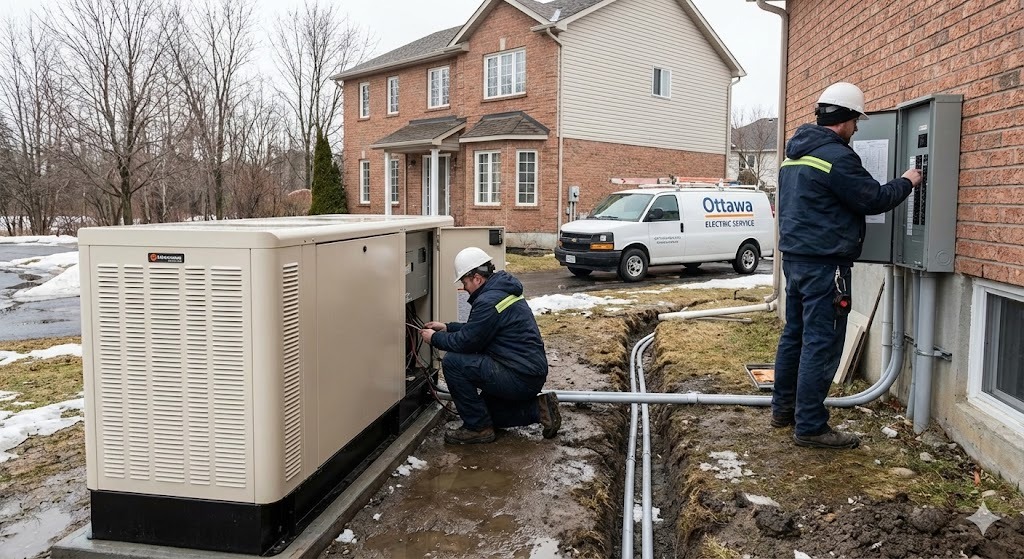
Backup Generator Installation: Power Through Ottawa’s Spring Storms
Ottawa’s spring storms bring unpredictable weather combining heavy rain, high winds, ice accumulation, and severe thunderstorms that frequently knock out power for hours or even days. As climate patterns shift and storms intensify, power outages are becoming more common across the region. A professionally installed backup generator ensures your family stays safe, warm, and connected during blackouts—keeping furnaces running, sump pumps protecting basements from flooding, refrigerators preserving food, and medical equipment operating without interruption. This comprehensive guide covers everything Ottawa homeowners need to know about backup generator installation in 2026, including costs, generator types, sizing considerations, installation requirements, and preparing your home for spring storm season.
Why Ottawa Homes Need Backup Generators
Spring Storm Power Outages
Ottawa’s spring weather creates perfect storm conditions for widespread power outages. Late-season ice storms coat power lines and tree branches, causing collapses under heavy weight. Spring thunderstorms produce damaging winds snapping utility poles and downing electrical infrastructure. Heavy rainfall saturates soil, destabilizing trees that topple onto power lines during windstorms.
Hydro Ottawa responds quickly to outages, but extensive storm damage can leave neighborhoods without power for 12-72 hours or longer. Rural and suburban areas typically experience longer restoration times than urban cores. When storms strike multiple areas simultaneously, utility crews prioritize critical infrastructure, delaying residential power restoration.
Protecting Essential Systems
Modern homes depend on electricity for critical systems beyond just lighting and entertainment. Furnaces require electricity to operate even when burning natural gas or propane—during spring cold snaps, homes without backup power lose heating entirely. Sump pumps protecting basements from flooding stop working during outages, creating flooding risks precisely when spring storms bring heavy rainfall.
Refrigerators and freezers lose cooling within hours during outages, spoiling hundreds of dollars worth of food. Home security systems, garage door openers, and internet connections all fail without power. For families with members requiring medical equipment like oxygen concentrators, CPAP machines, or medication refrigeration, power outages become genuine medical emergencies requiring immediate solutions.
Work-From-Home Considerations
Remote work arrangements make backup power increasingly important for Ottawa professionals. Lost work hours during multi-day outages translate directly to lost income for contractors, freelancers, and commission-based workers. Important video conferences, project deadlines, and client communications cannot wait days for power restoration. Backup generators ensure home offices remain operational regardless of grid power status.
Students engaged in online learning face similar challenges. Assignment submissions, virtual classes, and exam schedules don’t accommodate power outages. Backup generators keep families connected to work, school, and essential communications during extended blackouts common during Ottawa’s volatile spring weather.
Property Protection and Insurance
Extended power outages create significant property damage risks. Basement flooding from disabled sump pumps causes tens of thousands in water damage, mold remediation, and content replacement costs. Burst pipes during spring freezes when furnaces lose power create catastrophic water damage throughout homes. Insurance deductibles for these claims often exceed generator installation costs.
Some insurance companies offer premium discounts for homes with professionally installed backup generators, recognizing reduced claim risks. Even without direct premium savings, generator-equipped homes avoid out-of-pocket expenses from power-outage-related damage. The property protection value alone justifies generator investment for most Ottawa homeowners.
Aging Electrical Grid Infrastructure
Ontario’s electrical grid includes aging infrastructure requiring ongoing maintenance and occasional emergency repairs. Planned maintenance outages occasionally affect neighborhoods during infrastructure upgrades. Equipment failures at substations can cause localized blackouts unrelated to weather. As electrical demand increases with EV adoption and home electrification, grid strain may increase outage frequency.
Backup generators provide independence from grid reliability. Whether outages result from storms, equipment failures, or planned maintenance, generator-equipped homes maintain power continuously. This energy independence offers peace of mind impossible with grid-only power dependency.
Types of Backup Generators for Ottawa Homes
Portable Generators
Portable generators are mobile gasoline-powered units providing temporary backup power during outages. These affordable generators range from 3,000 to 10,000 watts, costing $500 to $3,000 depending on capacity and features. Portable units require manual setup during outages—homeowners must wheel generators outside, add gasoline, start engines manually, and connect appliances via extension cords or transfer switches.
While budget-friendly, portable generators have significant limitations. They cannot start automatically when outages occur—someone must be home to set up the generator. Gasoline storage presents safety concerns and gasoline supplies may be unavailable during widespread emergency situations. Portable generators are extremely loud, require frequent refueling during extended outages, and produce dangerous carbon monoxide requiring outdoor operation far from home openings.
Inverter Generators
Inverter generators represent advanced portable generator technology producing cleaner, more stable power suitable for sensitive electronics. These units run quieter than conventional portable generators and offer better fuel efficiency. Inverter generators cost $800 to $4,000 for models providing 2,000 to 7,000 watts of power. They work excellently for camping, tailgating, or occasional emergency backup for small loads.
However, inverter generators share portable generator limitations requiring manual operation and gasoline fuel. Their smaller capacities typically cannot power whole homes or even all essential circuits simultaneously. Inverter generators work best as supplemental power sources for specific equipment rather than comprehensive home backup solutions.
Standby Generators (Partial Home)
Standby generators are permanently installed units that automatically start when power outages occur. Partial-home standby generators typically provide 10,000 to 16,000 watts, sufficient for essential circuits including furnaces, refrigerators, sump pumps, lighting, and select outlets. These systems cost $6,000 to $12,000 installed, representing the most popular backup generator choice for Ottawa homeowners balancing capability and budget.
Standby generators connect to home natural gas or propane supplies, eliminating refueling needs during extended outages. Automatic transfer switches detect outages within seconds and start generators automatically—no homeowner intervention required even when families are away or sleeping. Standby generators operate much quieter than portable units and install outside homes on concrete pads meeting setback requirements.
Whole-Home Standby Generators
Whole-home standby generators provide 20,000 to 48,000 watts, powering entire homes including air conditioning, electric ranges, water heaters, and all circuits simultaneously. These premium systems cost $15,000 to $30,000 installed but deliver seamless backup power indistinguishable from grid electricity. Whole-home generators allow families to maintain completely normal lifestyles during outages without any load management or circuit prioritization.
Larger generators suit homes with high electrical demands including central air conditioning, electric vehicle charging, hot tubs, or large square footage. Homeowners who refuse to compromise on convenience during outages choose whole-home systems. For luxury homes or properties housing medically vulnerable individuals, whole-home generators provide essential peace of mind and uninterrupted power access.
Liquid-Cooled vs. Air-Cooled Generators
Generator cooling methods affect performance, noise levels, and lifespan. Air-cooled generators use fans to dissipate engine heat—these cost less but run louder and have shorter service lives around 2,000-3,000 hours. Air-cooled models work well for occasional outages but may wear faster in areas experiencing frequent power interruptions.
Liquid-cooled generators use enclosed cooling systems similar to automobile engines. They operate much quieter, run more efficiently, and last significantly longer—often 10,000+ hours of service life. Liquid-cooled models cost considerably more but provide superior long-term value for homes experiencing regular outages or requiring high-capacity whole-home backup. They’re typically found in larger generators over 22 kilowatts.
How to Size Your Backup Generator Correctly
Essential vs. Whole-Home Power
Generator sizing begins by determining whether you want to power essential circuits only or your entire home. Essential circuit backup includes furnace, refrigerator, freezer, sump pump, select lighting, and critical outlets—this approach requires 10,000-16,000 watt generators. Whole-home backup powers everything simultaneously without prioritization, requiring 20,000+ watt generators depending on home size and electrical loads.
Most Ottawa homeowners choose essential circuit backup, providing critical protection at reasonable costs. Whole-home backup suits those refusing any lifestyle compromises during outages or homes with medical equipment requirements demanding complete electrical system availability. Budget typically determines this fundamental decision more than actual need since essential backup adequately protects homes and families.
Calculating Your Power Requirements
Proper generator sizing requires calculating total wattage of devices you want to power simultaneously. Check appliance nameplates listing wattage or amperage ratings. For amperage ratings, multiply amps by voltage (120V for most appliances) determining watts. Add wattages of all devices you want running concurrently during outages plus 20-30% buffer for motor starting surges.
Typical essential loads include furnace (600-1,500 watts), refrigerator (600-800 watts), freezer (500-700 watts), sump pump (800-1,200 watts), lighting (500-1,000 watts), and miscellaneous outlets (500-1,000 watts). Total essential loads typically range from 4,000 to 7,000 watts continuous draw, requiring 10,000-12,000 watt generators accounting for starting surges when motors initially engage.
Starting Watts vs. Running Watts
Appliances with electric motors require significantly more power during startup than continuous operation. Sump pumps might run at 800 watts but need 2,400 watts momentarily during startup. Furnace blowers, refrigerator compressors, and air conditioners all experience similar surge requirements. Generators must handle these starting surges without overloading or stalling.
Generator specifications list both running watts (continuous capacity) and starting watts (surge capacity). Ensure your generator’s starting wattage exceeds the highest individual appliance starting requirement plus running wattage of other devices operating simultaneously. Professional generator sizing accounts for these surge requirements preventing undersized installations that can’t start essential equipment.
Common Load Examples
Small generator (8,000-10,000 watts) powers furnace, refrigerator, several lights, TV, internet router, and few outlets. This minimal backup keeps homes habitable during outages without extras. Medium generator (12,000-16,000 watts) adds sump pump, freezer, garage door opener, additional lighting, and more outlets providing comfortable emergency living. Large generator (18,000-22,000 watts) includes window air conditioner, well pump if applicable, washer/dryer, and nearly all circuits except electric range and central AC.
Whole-home generators (24,000+ watts) power everything including central air conditioning, electric cooking appliances, water heaters, and all circuits without restriction. Homeowners live completely normally during outages with whole-home systems. Most Ottawa homes find 12,000-14,000 watt generators provide optimal balance between capability and cost for essential backup needs.
Professional Load Calculations
While homeowners can estimate power needs using appliance ratings, professional electricians perform detailed load calculations ensuring accurate generator sizing. Our team assesses your electrical panel, identifies critical circuits, measures actual loads using metering equipment, and recommends appropriately sized generators. This professional sizing prevents expensive mistakes like undersized generators unable to handle actual loads or oversized generators wasting money on unused capacity.
Professional sizing also considers future electrical additions like electric vehicles or home expansions. Installing slightly larger generators initially costs less than replacing undersized generators later when needs increase. Our licensed electricians provide detailed load analysis ensuring optimal generator selection for your specific home and family requirements.
Backup Generator Installation Costs in Ottawa 2026
Portable Generator Costs
Basic portable generators cost $500 to $1,500 for 3,000-5,000 watt units suitable for powering few appliances. Mid-range portable generators providing 5,000-8,000 watts cost $1,200 to $2,500. Premium portable generators with 8,000-10,000 watt capacity and features like electric start cost $2,000 to $3,500. These prices include only the generator unit itself.
Adding transfer switch installation for portable generators costs $800 to $1,500 depending on whether you choose manual transfer switches or interlock kits. Basic interlock kits allowing panel-mounted switching cost $400 to $800 installed. Total portable generator solutions with proper transfer equipment range from $1,500 to $5,000 providing budget-conscious backup power for essential circuits.
Standby Generator Equipment Costs
Standby generator equipment costs vary significantly by capacity and brand. Small standby generators (8-10 kilowatts) cost $2,500 to $4,000 for equipment only. Medium standby generators (12-16 kilowatts) cost $4,000 to $7,000. Large standby generators (18-22 kilowatts) cost $6,000 to $10,000. Whole-home standby generators (24-48 kilowatts) cost $9,000 to $18,000 for equipment.
Popular brands include Generac, Kohler, Briggs & Stratton, and Cummins. Generac dominates the residential market offering reliable generators at competitive prices. Kohler produces premium generators with exceptional build quality and quieter operation at higher price points. Brand choice affects long-term reliability, parts availability, service network access, and resale value.
Installation Labor and Materials
Professional standby generator installation costs $3,000 to $7,000 for labor and materials depending on installation complexity. Basic installations with short gas line runs, existing concrete pads, and simple transfer switch connections cost toward the lower range. Complex installations requiring extensive gas line runs, new concrete pad construction, electrical upgrades, or challenging site conditions cost more.
Installation includes concrete pad construction ($500-$1,200), automatic transfer switch installation ($1,500-$3,000), gas line connection ($500-$2,000), electrical connections to panel, generator startup and testing, and permit coordination. Our team provides all-inclusive quotes specifying exactly what’s included preventing surprise costs during installation.
Total Installed System Costs
Complete standby generator systems including equipment, installation, and all materials cost $8,000 to $35,000 depending on capacity and complexity. Most Ottawa homeowners installing 12-14 kilowatt standby generators for essential circuits spend $10,000 to $15,000 for complete turnkey installations. Whole-home generator systems typically range from $18,000 to $30,000 installed.
These costs include generator equipment, automatic transfer switch, concrete pad, gas line connection, electrical installation, permits, ESA inspection, startup commissioning, and warranty activation. Financing options help spread costs over time making backup power accessible for more families. Many homeowners finance generators through home equity lines of credit, personal loans, or manufacturer financing programs offering competitive rates.
Additional Cost Considerations
Some homes require electrical panel upgrades before generator installation. Homes with 100-amp service or older fuse panels may need upgrades to 200-amp breaker panels accommodating automatic transfer switches and modern electrical loads. Our electrical panel upgrade services cost $1,400 to $2,500 typically, often combined with generator installation for efficiency.
Gas line extensions add costs when existing gas meters sit far from optimal generator locations. Natural gas line installation costs $500 to $2,000 depending on distance and routing complexity. Propane tank installation for homes without natural gas service costs $800 to $2,500 including tank rental or purchase and initial fill. Landscaping restoration after installation adds $300 to $1,000 depending on affected areas.
Long-Term Operating Costs
Standby generators require annual maintenance costing $200 to $400 including oil changes, filter replacements, battery checks, and system testing. Generators also self-exercise weekly for 10-20 minutes maintaining readiness—this automatic testing consumes minimal fuel, typically $5 to $15 monthly. During actual outages, fuel consumption depends on generator size and load—expect $10 to $30 per day for natural gas generators running continuously.
These modest operating costs prove insignificant compared to outage-related expenses from spoiled food, hotel stays, lost wages, or property damage. Generator ownership delivers excellent long-term value through reliable backup power and property protection far exceeding ongoing maintenance and fuel expenses.
Natural Gas vs. Propane Backup Generators
Natural Gas Generators
Natural gas generators connect directly to home gas lines providing unlimited fuel during outages. This convenience eliminates refueling concerns during extended multi-day blackouts. Natural gas burns cleaner than gasoline, reducing emissions and engine wear. In Ottawa, Enbridge natural gas service covers most urban and suburban areas making natural gas the preferred fuel choice for standby generators.
Natural gas generators start instantly during outages and run indefinitely as long as gas service continues. Gas utilities maintain separate infrastructure from electrical grids—power outages rarely affect natural gas supply. Monthly gas bills increase only during actual outage usage, typically adding modest amounts to utility costs. Natural gas generators require less frequent maintenance than gasoline generators due to cleaner fuel combustion.
Propane Generators
Propane generators suit homes without natural gas service or in rural areas beyond gas line reach. Propane tanks (usually 500-1,000 gallons for generator use) install on properties providing fuel storage for extended outages. Propane burns nearly as cleanly as natural gas and stores indefinitely without degradation unlike gasoline which spoils within months.
Propane costs more per BTU than natural gas but remains cost-effective for backup power given infrequent usage. Tank rental or purchase adds upfront costs and periodic refilling requires coordination with propane suppliers. However, propane generators operate identically to natural gas models providing reliable automatic backup power. For homes already using propane for heating or cooking, adding generator fuel consumption integrates seamlessly with existing fuel delivery schedules.
Fuel Consumption and Costs
Generator fuel consumption depends on size and load. A 12-kilowatt generator running at 50% load consumes approximately 150-200 cubic feet of natural gas per hour, costing roughly $1.50-$2.00 per hour based on Ottawa gas rates. Running continuously during a 48-hour outage costs $75-$100 in natural gas. Propane consumption runs slightly higher due to lower BTU content, costing $100-$150 for similar usage.
These fuel costs remain reasonable considering the value provided—keeping homes warm, preventing flooding, preserving food, and maintaining work capabilities. Compared to hotel costs, generator fuel expenses prove quite economical. Most homeowners experience only 1-3 significant outages annually, making total annual fuel costs minimal while maintaining continuous outage protection.
Fuel Line Installation Requirements
Natural gas generators require licensed gas fitters to install gas lines from meters to generator locations. Gas line installation must meet Ontario gas code specifications for capacity, material, pressure testing, and safety. Most generator installations require 1-inch gas lines supporting adequate flow for generator consumption plus existing home appliances. Our electricians coordinate with licensed gas contractors ensuring proper fuel line installation meeting all code requirements.
Propane installations require tank placement meeting setback requirements from property lines and buildings. Underground propane tanks offer aesthetic advantages but cost more to install than above-ground tanks. Propane suppliers typically handle tank installation, though site preparation and concrete pads may be needed. Our team coordinates all fuel system requirements ensuring complete turnkey generator installation regardless of fuel type chosen.
Which Fuel is Right for Your Home?
Choose natural gas if available at your property—it offers superior convenience, lower fuel costs, and no refilling concerns. Homes with existing natural gas service find natural gas generators the obvious choice. Select propane for properties without natural gas access or in rural areas where gas lines don’t reach. Some homeowners choose propane even with natural gas available, preferring independence from utility services during emergencies.
Our team helps evaluate fuel options during consultations, considering availability, costs, property constraints, and personal preferences. We provide recommendations based on your specific situation ensuring optimal generator fuel selection for reliable long-term backup power.
Professional Backup Generator Installation Process
Step 1: Free Consultation and Site Assessment
Installation begins with comprehensive home assessment. Our licensed electricians visit your property evaluating electrical panels, identifying optimal generator placement, assessing gas line routing requirements, and discussing your backup power needs. We review which circuits you want powered, calculate necessary generator capacity, and provide detailed recommendations matching your requirements and budget.
During consultations we identify potential installation challenges like difficult gas line routes, inadequate electrical panel space, or site drainage issues requiring attention. This thorough assessment ensures accurate quotes and prevents unexpected complications during installation. We answer all questions about generator operation, maintenance, fuel requirements, and expected performance ensuring informed purchase decisions.
Step 2: Generator Selection and Quote
Based on assessment findings, we recommend specific generator models and sizes. Our detailed quotes include generator equipment, automatic transfer switch, installation labor, concrete pad construction, gas line connection, electrical work, permits, and any necessary upgrades. Quotes specify exactly what’s included and itemize costs providing complete transparency.
We explain warranty coverage, maintenance requirements, and expected generator lifespan helping you understand total ownership costs. Equipment lead times vary by manufacturer and model—typically 2-8 weeks for delivery after ordering. We coordinate delivery timing with installation scheduling ensuring efficient project completion once generators arrive.
Step 3: Permits and Approvals
Standby generator installations require municipal building permits and ESA electrical permits. Our team handles all permit applications submitting required documentation, installation plans, and technical specifications. Permit approval typically takes 1-2 weeks though timing varies by municipality. We coordinate with building departments and ESA ensuring all regulatory requirements are met before beginning installation work.
Some municipalities have noise bylaws affecting generator placement and require specific setback distances from property lines or neighboring homes. Our team ensures proposed installations comply with all local regulations preventing issues during inspections or future property use. Proper permitting protects homeowners from code violations and ensures installations meet safety standards.
Step 4: Site Preparation
Before generator delivery, we prepare installation sites. This includes constructing concrete pads sized appropriately for generator models (typically 4×4 feet for smaller units up to 5×6 feet for larger generators). Pads must be level, properly reinforced, and positioned meeting setback requirements from buildings and property lines. Proper drainage around pads prevents water accumulation affecting generator operation.
We coordinate gas line installation with licensed gas fitters running lines from meters to generator locations. Gas lines must be properly sized, pressure tested, and inspected before generator connection. Electrical conduit installation from generators to panels occurs during site preparation stages. This groundwork ensures generator installation proceeds smoothly once units arrive on-site.
Step 5: Generator and Transfer Switch Installation
On installation day, generators are positioned on prepared pads and secured properly. We install automatic transfer switches in electrical panels creating connections between utility power, generator power, and selected circuits. Transfer switches include circuit breakers protecting generator and home circuits. Our electricians wire generators to transfer switches using appropriate gauge wire and weatherproof connections meeting electrical codes.
Gas connections complete fuel system installation. We perform leak testing ensuring safe gas connections before initial startup. Battery installation, coolant filling (for liquid-cooled models), and final electrical connections prepare generators for commissioning. Installation typically takes one full day for straightforward projects, though complex installations may require 2-3 days depending on scope.
Step 6: Startup, Testing, and Training
After installation, we perform complete generator commissioning. This includes starting generators, checking all electrical connections under load, verifying automatic transfer switch operation, testing each powered circuit, and confirming proper voltage and frequency. We simulate power outages ensuring generators start automatically and transfer loads correctly within specified timeframes.
Homeowner training covers generator operation, emergency shutdown procedures, maintenance requirements, weekly exercise cycle verification, and troubleshooting common issues. We demonstrate control panel features, explain status indicators, and review user manuals. Proper training ensures homeowners understand their backup systems and can identify when professional service is needed. We also program generator controllers setting exercise schedules and monitoring parameters.
Step 7: Inspections and Final Approval
After installation completion, municipal and ESA inspectors verify compliance with electrical and building codes. Our electricians coordinate inspection scheduling and address any deficiency items identified during inspections. Once inspections pass, we receive certificates of approval completing the permitting process. These certificates prove proper installation and satisfy insurance and warranty requirements.
We provide complete documentation including warranties, maintenance schedules, user manuals, inspection certificates, and emergency contact information. This documentation stays with homes throughout ownership providing future buyers valuable installation records. Our team remains available for questions and service throughout generator lifespans ensuring continued reliable backup power protection.
Transfer Switch Requirements for Backup Generators
Why Transfer Switches Are Mandatory
Transfer switches safely isolate generator power from utility power preventing dangerous backfeeding. Backfeeding occurs when generator power flows backward through electrical meters into utility lines, creating lethal hazards for utility workers repairing outages and potentially damaging generators. Ontario electrical code requires transfer switches or interlock devices for all generator connections—direct connections without transfer mechanisms are illegal and extremely dangerous.
Transfer switches also protect generators from damage when utility power returns. Automatic switches detect power restoration and transfer loads back to utility power gracefully, preventing voltage conflicts between generators and restored grid power. This protection extends generator lifespans and prevents expensive repair needs from improper synchronization.
Manual Transfer Switches
Manual transfer switches require homeowners to physically flip switches transferring power from utility to generator during outages. These dedicated panels mount near main electrical panels and include switches for each circuit you want generator-powered. Manual switches cost $800 to $1,500 installed and work well with portable generators requiring manual startup anyway.
The manual switching process takes only minutes—homeowners start portable generators, allow warmup time, then flip transfer switch circuits to generator power. When utility power returns, the process reverses by switching back to utility before shutting down generators. While requiring some effort, manual switches provide affordable safe generator connections for budget-conscious homeowners using portable generators.
Automatic Transfer Switches
Automatic transfer switches (ATS) detect power outages within seconds and signal generators to start automatically. Once generators reach operating voltage and frequency, ATS units transfer loads from utility to generator power without any homeowner intervention. These sophisticated devices cost $1,500 to $3,000 installed and are required for all standby generator installations.
Automatic transfer switches constantly monitor utility power quality detecting outages, brownouts, or voltage irregularities. When issues occur, ATS units start generators and transfer loads seamlessly. When utility power restores with stable voltage, ATS switches back automatically and signals generators to cool down and shut off. This completely automatic operation means backup power activates even when homeowners are sleeping, away, or traveling.
Interlock Kits
Interlock kits provide budget alternatives to full transfer switches for portable generator connections. These mechanical devices install in main electrical panels preventing simultaneous closure of main breaker and generator breaker. Homeowners manually open main breakers and close generator breakers powering homes through generator inputs. Interlocks cost $400 to $800 installed.
While more affordable than transfer switches, interlocks provide less circuit selectivity—when engaged, entire panels receive generator power rather than selected circuits. This works acceptably with adequately sized portable generators but requires careful load management ensuring generators aren’t overloaded by too many circuits operating simultaneously. Interlocks suit budget-conscious homeowners accepting more hands-on generator operation.
Load Management Features
Advanced automatic transfer switches include load management capabilities that prioritize critical circuits and shed non-essential loads when generator capacity reaches limits. These smart switches can disconnect air conditioning or electric water heaters when other critical loads like furnaces or sump pumps operate, optimizing generator capacity without overloading.
Load management allows smaller generators to power more home circuits through intelligent load prioritization. This technology suits homeowners wanting extensive backup coverage without investing in large whole-home generators. Our team configures load management priorities during installation ensuring critical systems always receive power while managing total generator loads appropriately.
Transfer Switch Sizing
Transfer switches must be rated appropriately for generator output and home electrical loads. Common residential transfer switches include 100-amp, 200-amp, and 400-amp ratings. Most installations use 200-amp automatic transfer switches matching standard residential electrical service sizes. Transfer switch amperage should match or slightly exceed generator output capability.
Our electricians size transfer switches during load calculations ensuring adequate capacity for generator output and home loads. Undersized transfer switches create bottlenecks limiting generator effectiveness. Oversized switches waste money without performance benefits. Proper sizing ensures optimal system performance and safety throughout generator lifespans.
Backup Generator Maintenance Tips
Weekly Automatic Exercise Cycles
Standby generators automatically exercise weekly for 10-20 minutes maintaining mechanical and electrical readiness. These self-test cycles occur on scheduled days and times you program during installation. Exercise keeps engine lubrication circulating, maintains battery charges, and verifies proper operation. Homeowners should verify weekly exercises occur properly by checking status lights or monitoring apps confirming successful tests.
Exercise cycles consume minimal fuel but are critical for generator reliability. During exercises, generators start, run at no load or light load, then shut down automatically. If exercises fail or error codes appear, contact service technicians immediately since exercise failures indicate problems requiring attention before actual outages occur when you need backup power most.
Annual Professional Maintenance
Schedule professional generator maintenance annually regardless of usage frequency. Annual service includes oil and filter changes, spark plug replacement or cleaning, air filter replacement, battery testing and replacement if needed, coolant level checks, visual inspections for leaks or damage, and complete system testing under load. This preventive maintenance costs $200 to $400 but ensures reliable operation when outages occur.
Many homeowners schedule spring maintenance preparing generators for storm season. Our maintenance services include comprehensive generator inspections identifying potential issues before they cause failures. We document service visits maintaining warranty compliance and tracking generator condition over time. Regular professional maintenance dramatically extends generator lifespans while ensuring peak performance.
Homeowner Monitoring Tasks
Between professional service visits, homeowners should monitor generators monthly. Check oil levels using dipsticks, inspecting for dark or low oil indicating maintenance needs. Verify generators remain clean and free from debris, vegetation growth, or animal nests in air intakes. Listen during weekly exercises confirming smooth operation without unusual sounds suggesting mechanical problems.
Inspect areas around generators ensuring proper drainage and no water accumulation. Check for gas leaks using soapy water on connections looking for bubbles indicating leaks requiring immediate professional attention. Review controller displays or smartphone apps checking for error codes or warnings. These simple monthly checks take only minutes but help identify issues early before they compromise backup power reliability.
Battery Maintenance
Generator starting batteries require attention ensuring reliable starting during outages. Most generators include battery charging systems maintaining charge levels through weekly exercises and continuous trickle charging. However, batteries typically last 2-4 years before requiring replacement. Monitor battery voltage through controller displays—voltages consistently below 12 volts indicate aging batteries needing replacement soon.
Cold weather stresses batteries reducing available starting power. Before winter, test battery health and replace weak batteries preventing cold-weather starting failures. Our service visits include battery testing and replacement recommendations. Maintaining fresh batteries ensures generators start reliably during critical outages regardless of weather conditions or how long since last exercise cycle.
Fuel System Maintenance
Natural gas generators require minimal fuel system maintenance beyond ensuring gas supply remains uninterrupted and checking for leaks annually. Propane generators need propane tank level monitoring ensuring adequate fuel for extended outages. Schedule propane refills before levels drop below 20% maintaining emergency reserves. Propane suppliers offer automatic delivery programs monitoring tank levels and scheduling refills proactively.
Gas line connections should be inspected annually for corrosion or damage. Licensed gas fitters perform pressure testing during service visits verifying leak-free operation. Fuel filters in some generator models require periodic replacement following manufacturer specifications. Our comprehensive service includes all fuel system checks ensuring reliable fuel delivery when generators operate during actual power outages.
Seasonal Preparation
Before Ottawa’s spring storm season, perform generator readiness checks. Schedule professional maintenance if annual service is due soon. Test generators under load by simulating outages using transfer switch test modes. Verify all powered circuits function correctly. Stock any maintenance supplies like spare oil, filters, or batteries you might need if outages occur during spring storms when service calls surge and parts availability may be delayed.
After storm season, inspect generators for any weather damage, corrosion from moisture exposure, or vegetation growth blocking air intakes. Address any issues promptly maintaining generators in ready condition year-round. Even though spring storms present highest outage risks, generators should remain maintained and ready providing protection regardless when unexpected outages occur throughout the year.
Frequently Asked Questions About Backup Generator Installation
How much does it cost to install a backup generator in Ottawa?
Backup generator installation costs $8,000 to $35,000 depending on generator size and installation complexity. Most Ottawa homeowners installing 12-14 kilowatt standby generators for essential circuits spend $10,000 to $15,000 for complete installations including equipment, automatic transfer switch, concrete pad, gas line connection, electrical work, and permits. Portable generator solutions with transfer switches cost $1,500 to $5,000. Whole-home generator systems cost $18,000 to $30,000 installed. Our team provides detailed quotes specifying all costs for your specific installation requirements.
What size generator do I need for my Ottawa home?
Most Ottawa homes need 12,000-16,000 watt generators for essential circuit backup including furnace, refrigerator, freezer, sump pump, lighting, and select outlets. Whole-home backup requires 20,000-48,000 watts depending on home size and whether you want to power air conditioning and all circuits simultaneously. Generator sizing requires calculating total wattage of devices you want powered simultaneously plus buffer for motor starting surges. Our licensed electricians perform professional load calculations ensuring accurate generator sizing matching your specific backup power needs and budget.
How long does generator installation take?
Complete generator installation from consultation to finished system takes 4-8 weeks including equipment ordering, permit approval, site preparation, and installation. Generator delivery takes 2-6 weeks after ordering depending on manufacturer and model availability. Permit processing requires 1-2 weeks. Actual installation work takes 1-2 days for straightforward projects. Site preparation including concrete pad construction occurs before generator delivery. Complex installations requiring extensive gas line runs or electrical upgrades may take 2-3 installation days. Our team coordinates all phases ensuring efficient project completion.
Should I choose natural gas or propane for my generator?
Choose natural gas if available at your property—it offers superior convenience with unlimited fuel during outages, lower operating costs, and no refilling concerns. Natural gas generators connect directly to home gas lines eliminating fuel storage needs. Select propane for properties without natural gas service or in rural areas where gas lines don’t reach. Propane requires tank installation but stores indefinitely and provides reliable backup power. Natural gas costs roughly $1.50-$2.00 per hour operating generators while propane costs slightly more. Our team helps evaluate fuel options based on your property and preferences.
Do I need a permit to install a backup generator in Ottawa?
Yes, standby generator installations require municipal building permits and ESA electrical permits in Ottawa. Building permits ensure installations meet setback requirements, noise bylaws, and safety codes. ESA permits cover electrical connections, transfer switches, and generator wiring. Professional installation companies handle all permit applications and coordinate inspections ensuring code compliance. Permit costs are typically included in installation quotes. Installing generators without proper permits creates code violations, insurance issues, and safety concerns. Our team manages all permitting requirements providing turnkey installations meeting all regulatory standards.
How often do backup generators need maintenance?
Schedule professional generator maintenance annually regardless of usage. Annual service includes oil and filter changes, spark plug service, air filter replacement, battery testing, coolant checks, and complete system testing. Maintenance costs $200 to $400 annually. Generators self-exercise weekly for 10-20 minutes maintaining readiness—homeowners should verify successful exercise cycles occur. Between professional service, check oil levels monthly, inspect for leaks or damage, and ensure areas around generators remain clean and clear. Regular maintenance ensures reliable operation during actual outages when you need backup power most.
Can I install a backup generator myself?
No, standby generator installation requires licensed electricians and gas fitters. Generator installations involve electrical panel work, transfer switch connections, concrete pad construction, and gas line installation—all requiring professional expertise and licenses. DIY generator installations violate Ontario electrical codes, void equipment warranties, create serious safety hazards, and are illegal. Only licensed professionals can obtain necessary permits and coordinate ESA inspections. Professional installation ensures safe, reliable backup power systems meeting all code requirements. Our licensed team provides complete turnkey installations protecting your family and investment through proper professional workmanship.
Will a backup generator power my entire house?
It depends on generator size. Whole-home generators rated 24,000-48,000 watts power entire homes including air conditioning, electric ranges, water heaters, and all circuits simultaneously. These systems cost $18,000-$30,000 installed. Most Ottawa homeowners choose partial-home backup with 12,000-16,000 watt generators powering essential circuits including furnace, refrigerator, sump pump, lighting, and select outlets at $10,000-$15,000 installed. Essential backup provides critical protection at reasonable cost while whole-home backup offers complete convenience at premium pricing. Our team helps determine appropriate generator sizing balancing coverage and budget.
Prepare Your Ottawa Home for Spring Storm Season
Ottawa’s spring storms bring unpredictable weather and frequent power outages affecting thousands of homes annually. Backup generators provide reliable protection keeping families safe, homes protected, and lives continuing normally during blackouts. Whether choosing essential circuit backup or whole-home systems, professional generator installation delivers peace of mind that your family will weather storm season comfortably.
Don’t wait until outages occur to consider backup power. Spring storm season arrives quickly, and generator installations require several weeks from consultation to completion. Early planning ensures your home has reliable backup power before severe weather strikes. Our licensed electricians provide expert generator sizing, selection, and installation ensuring optimal backup power solutions for your specific needs.
Contact Ottawa Electric Service today for free generator consultations. We’ll assess your home, calculate power requirements, recommend appropriate generators, and provide detailed quotes for complete turnkey installations. Protect your family this spring with professional backup generator installation.
Professional Backup Generator Installation in Ottawa
Ottawa Electric Service provides expert backup generator installation throughout Ottawa and surrounding areas. Our licensed electricians handle complete installations from consultation through final inspection ensuring reliable backup power for your home.
Our Generator Installation Services:
- ✓ Free Home Assessments & Load Calculations
- ✓ Generator Sizing & Selection Assistance
- ✓ Natural Gas & Propane Generator Installation
- ✓ Automatic Transfer Switch Installation
- ✓ Concrete Pad Construction
- ✓ Gas Line Coordination
- ✓ All Permits & ESA Inspections
- ✓ System Startup & Homeowner Training
- ✓ Annual Maintenance Services
- ✓ All Major Generator Brands
Note: All prices mentioned in this article are provided for general reference and informational purposes only. These prices are not fixed and may vary depending on facts, market conditions, location, time, availability, or other relevant factors. Actual prices may change without prior notice. Readers are advised to verify details independently before making any decisions.